
STATE AND LOCAL NEWS THAT MATTERS
National


Read More





Trending
Continued
Bob Woodson died peacefully at his home on the evening of May 19, 2026, at the age of 89. He was a national treasure, beloved by the thousands he served through the Woodson Center for over four decades, yet never quite understood by Presidents, from Ronald Reagan to Donald Trump, who often invited him to the White House. Senators, Congressmen, and every Speaker of the House from Jack Kemp to Paul Ryan caught sight of Bob’s vision of an America fully redeemed from its “birth defect of slavery,” as he called it, but few fully embraced his remarkable plan to heal wounds, foster hope, and ennoble resilience.
Bob was wedded to neither political party. He called himself a “radical pragmatist,” and talked with ease and grace to both the left and right. When he first came to prominence, conservatives should have been his natural constituency; but before the fall of the Berlin Wall, their reverential allusions to the mediating institutions through which Bob understood that the real redemptive work had to take place—our families, local communities, and churches—always seemed to be drowned out by their full-throated defense of free markets. The Communist threat abroad and the ever-growing bureaucracy of the Progressive state at home fixed their attention almost singularly on commerce, as a strategy of resistance, if not of defiance. There were exceptions, of course. The Bradley Foundation, with which Bob worked closely for many years, comes to mind. But by and large, it was the age of the free market veto. Economic efficiency, not the alarming decline of social capital, about which Robert Nisbet had warned decades earlier, in The Quest for Community (1953), was all that seemed to matter. If we were to describe the contrast between what Bob had in mind and what the conservative establishment was defending, we would say that Bob was on the ground, helping to recover and build the world that Tocqueville had described so beautifully in Democracy in America, while the conservative establishment was holding seminars on, and deriving policy prescriptions from, Adam Smith’s The Wealth of Nations.
Small Business Administration head Kelly Loeffler said that the agency found $200 billion in fraudulent Paycheck Protection Program loans, which were intended to allow businesses to pay staff during the pandemic.
"At the SBA, we found $200 billion in fraudulent PPP loans that the Biden administration tried to hide, and forgive, and sweep under the rug," Loeffler said during President Donald Trump's Cabinet meeting at Camp David on Wednesday.
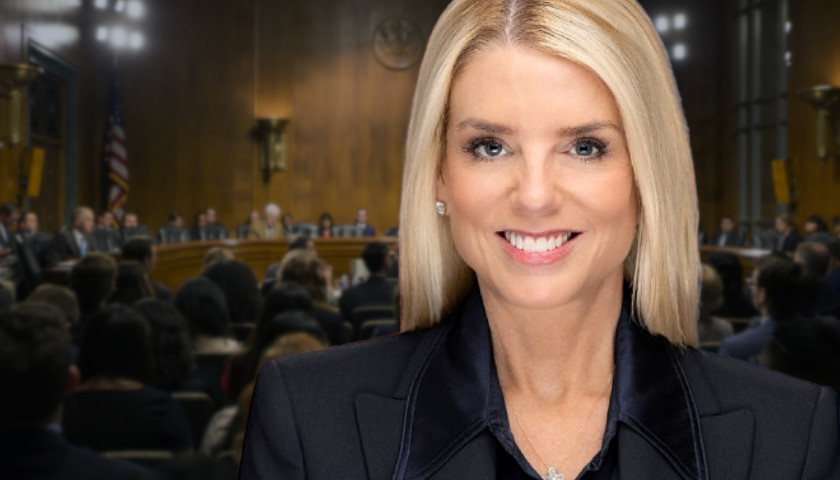
Former Attorney General Pam Bondi, who is reportedly battling thyroid cancer, has been appointed by President Donald Trump to serve on an advisory panel focused on Artificial Intelligence policy.
Trump dismissed Bondi as attorney general in April, and she will now return to the White House to serve on the Presidential Council of Advisors on Science and Technology (PCAST), according to Axios. She received a thyroid cancer diagnosis shortly after she left the Department of Justice, the outlet reported, citing an anonymous source.
Former President Joe Biden sued the Justice Department Tuesday to block the release of recordings and transcripts from interviews he gave to a ghostwriter for his 2017 memoir, which were included in a special counsel probe regarding his handling of classified materials after he served as vice president.
The lawsuit comes ahead of the department's planned June 15 release of the materials to the House Judiciary Committee and the conservative Heritage Foundation, which requested the information under the Freedom of Information Act, per Reuters.
Minneapolis Police Chief Brian O'Hara on Tuesday resigned from his post after an investigation found that he maintained sexual relationships with public employees.
Mayor Jacob Frey confirmed O'Hara's resignation in a press conference, saying "when you serve as chief of the Minneapolis Police Department, trust is not secondary to the job, it is the job. When trust is broken, it becomes extremely difficult to continue leading effectively."
President Donald Trump on Wednesday indicated he would not rush to conclude an agreement to end the Iran war in order to improve party odds in the November midterms, saying he did not consider the conflict's electoral impacts when negotiating.
"Iran is very much intent, they want very much to make a deal. So far, they haven't gotten there that we're not satisfied with it, but that we will be. We will be either that, or we'll have to just finish the job," he said during Wednesday's Cabinet meeting. "Maybe we have to go back and finish it. Maybe we don't right now."
American consumer confidence dropped slightly in May as inflationary pressure and high gasoline prices weighed on their concerns.
The Consumer Confidence Index dipped last month 0.7 points, to 93.1, down from an upwardly revised 93.8 the previous month, according to The Conference Board, a nonprofit think tank whose economic analysis is widely followed.
Woke AI is the worst AI, with blue-state politics and ideological bias as its source code. Take, for example, Anthropic, whose executives include senior Biden-era officials and the former head of Sleepy Joe’s AI Safety Institute. No wonder the company opposes President Trump’s executive orders to create a national framework for AI leadership. The company also opposes Trump’s effort to eliminate onerous and prejudicial state laws that have nothing to do with AI safety. That policy alignment is not accidental, particularly when it comes to Anthropic’s attempt to sell “safety” tools to the Pentagon.
Bear in mind, too, that Anthropic was seeded by effective altruism (EA) money, courtesy of Facebook cofounder Dustin Moskovitz and Sam Bankman-Fried’s Alameda Research, and wrapped in EA rhetoric about “long-term” humanity. Its political network tilts hard left, its CEO despises Trump, its cofounder mocks Catholics, and its policy shop is a think tank for brain-dead hacks who oppose Trump’s agenda.
Texas Attorney General Ken Paxton on Tuesday evening was projected to win his primary challenge against Sen. John Cornyn, R-Texas, decisively, marking the ouster of the decades-serving senior lawmaker from the upper chamber.
The Associated Press projected Paxton to win at 9:02 p.m. EST, with 49% of precincts reporting. As of press time, Paxton led with 62.5% to Cornyn's 37.5%.
A panel of federal district court judges temporarily blocked Alabama's plan to enact its 2023 congressional map for upcoming elections.
The Alabama legislature moved to implement its 2023 congressional map after the U.S. Supreme Court weakened section two of the Voting Rights Act, a provision designed to create more majority-minority congressional districts across the country.
Atop Biden Justice Department official and key ally of then-Attorney General Merrick Garland raised legal “concerns” about the FBI's raid on Mar-Lago, warning that then-former President Donald Trump may have actually declassified the records seized by agents, a newly-unearthed email obtained by Just the News shows.
Patty Stemler, a decades-long DOJ veteran who was reportedly picked by Garland in 2022 to help consult on Trump-related cases, sent an email just two days after the bureau’s Aug. 8, 2022 raid of Trump’s Florida resort home, where Stemler said she had “a few concerns.”
The GOP-led South Carolina Senate voted down a measure that would have advanced a new congressional map. The vote brings to an end a last-minute redistricting effort in the state.
President Donald Trump urged lawmakers to pass a redrawn map, which would have eliminated the state's single majority-Black district, NBC News reported.
Washington state will open its bar exam starting in September to graduates of non-ABA-accredited law schools, provided they are already eligible to sit for the exam in at least one other state. The Washington State Bar Association’s Board of Governors approved the change in early May.
The decision makes Washington the fourth jurisdiction in recent months to reduce its dependence on ABA accreditation as a prerequisite for attorney licensing. Earlier this year, the highest courts in Alabama, Florida and Texas – all under Republican leadership – moved to either eliminate the ABA requirement entirely or expand recognition to include additional institutions.
An unreleased poll appears to undermine the White House’s stated rationale for pivoting away from policies that inflame pharmaceutical companies.
The Daily Caller News Foundation obtained a secret poll conducted in October 2025 by President Donald Trump’s longtime pollster Tony Fabrizio finding that 73% of voters expressed concern about childhood vaccine mandates, while a whopping 90% of voters expressed concern about the pharmaceutical industry’s corrupting influence.
Republican Kentucky Rep. Thomas Massie filed to run for his seat in 2028 on Sunday after losing his primary seat to a challenger backed by President Donald Trump.
Massie said he filed with the Federal Elections Commission (FEC) in order to raise funds for his political operations as a potential candidate, though he has not made a final decision on which office to seek. He lost his primary race to former Navy SEAL Ed Gallrein by a 9-point margin after Trump aggressively campaigned against Massie over his opposition to the Iran war, his multiple votes against the One Big, Beautiful Bill Act and his successful calls to release the files surrounding Jeffrey Epstein.