
STATE AND LOCAL NEWS THAT MATTERS
Commentary




Read More





Trending
Continued
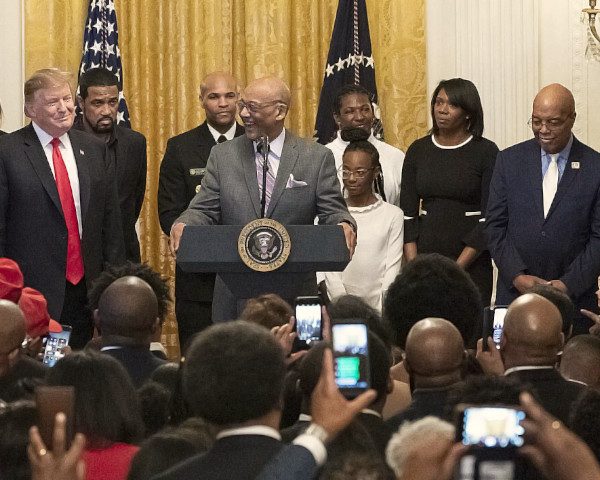
Ever since the recent decision of the Supreme Court limiting the use of race in drawing congressional districts, there has been a steady drumbeat of criticism claiming that the ruling somehow took away the rights of blacks and other minorities.
But nothing could be further from the truth.
The Chinese government is tightening the screws on American investment in its artificial intelligence sector. The core purpose is to keep U.S. capital out of technologies it deems “strategically sensitive” to national security. The protective action is a reminder that Washington also needs to prioritize insulating our own critical sectors from foreign adversaries.
Few industries are more important to our national security than healthcare. More than 131 million people—nearly two-thirds of all U.S. adults—use prescription medications. Yet the United States has allowed its pharmaceutical supply chains to become dangerously dependent on foreign rivals—particularly China.
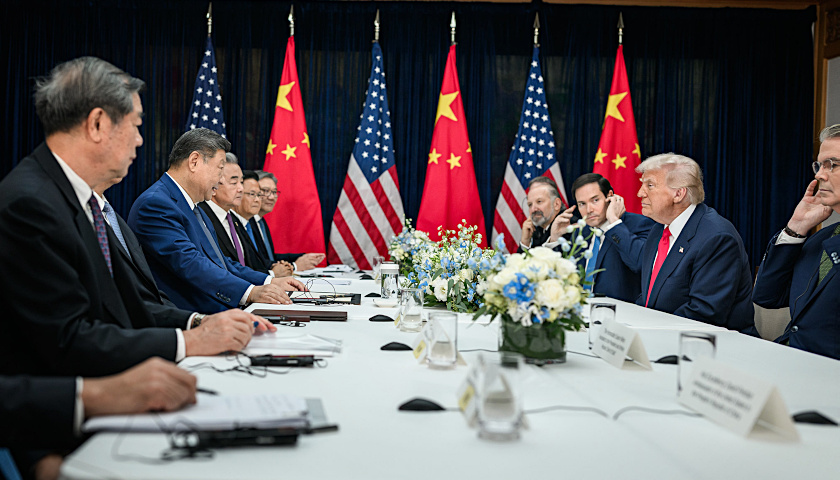
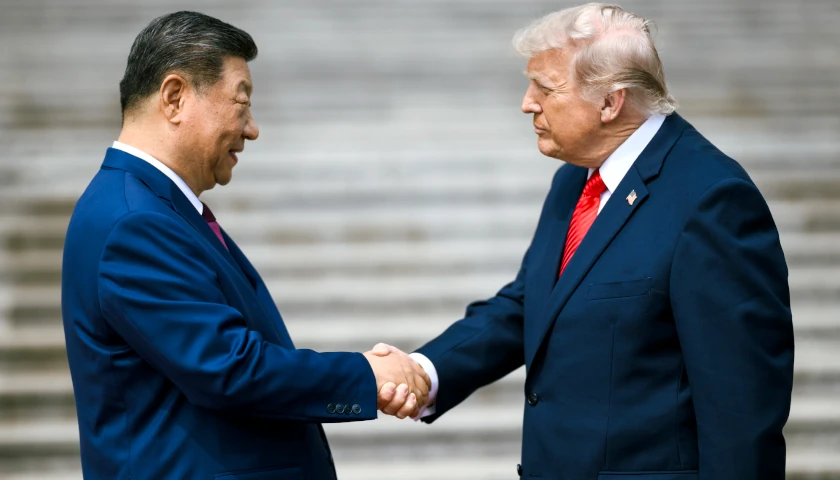
Many of our conservative friends are extremely concerned that President Trump’s visit to Red China, and his effusive praise of Communist Dictator Xi Jinping, signals a weakening of our security posture towards the Communist Chinese behemoth.
Attempts to restructure government at the federal level are mostly on the Democrat agenda. Pack the US Supreme Court. Elect presidents via popular vote. Turn Puerto Rico and Washington, DC, into states with two senators each. Implement national mail-in voting, automatic voter registration, legalize ballot harvesting, lower the voting age to 16, let felons vote, let noncitizens vote. And, of course, end the Senate filibuster. If they could, Democrats would do all of this.
Meanwhile, however, there is a growing bipartisan movement to implement term limits for members of the House and Senate. A bill has been introduced in the 119th Congress, and President Trump has supported term limits consistently since he first ran for president in 2016. But federal term limits would do more harm than good. Explaining why offers insights into how an entrenched bureaucracy gains power in democracies, and California is a prime example.
America’s fertility rate has hit a new record low of 1.57 in 2025, well below replacement rate. It’s been on this steep downward trajectory since 2007.
The MAHA movement has recently brought much-needed attention to America’s fertility crisis, with Secretary of Health and Human Services Robert F. Kennedy calling it a “national security threat.” MAHA is proactively addressing the root health causes of the rising infertility crisis in our country, like reducing environmental toxins and chemical exposure and improving diet and nutrition by reducing consumption of ultra-processed foods, to improve natural fertility.
In recent years, a quietly radical idea has gained traction in certain environmental circles: stop having children. Some members of Extinction Rebellion in the UK have embraced an anti-natalist position, arguing that a shrinking human population is one of the most powerful levers available for reducing environmental damage. If fewer people exist, the thinking goes, then less energy gets consumed, fewer habitats get destroyed, and the planet gets a much-needed chance to breathe. It is an emotionally compelling argument. But is it actually true? The evidence suggests not. A growing body of research indicates that population decline, by itself, is a surprisingly weak instrument for environmental repair. The relationship between fewer people and a healthier planet is messier and far less automatic than anti-natalists tend to assume.
Perhaps the most fundamental problem with the anti-natalist climate argument is one of timing. Climate change is seen as an urgent crisis demanding decisive action over the next few decades. Population decline, by contrast, operates on a generational timescale, and the two simply do not align in the way that environmental campaigners often hope. To understand why, researchers constructed a rigorous thought experiment. They compared two long-run visions of humanity’s demographic future: one in which global fertility continues falling below replacement level, eventually leading to a shrinking world population, and another in which fertility rates stabilize at replacement level, sustaining a population roughly 90 percent larger by the year 2200. These are dramatically different futures in human terms. Yet when scientists ran both scenarios through a leading climate and economic model, the difference in projected global temperatures by 2200 was less than one-tenth of a degree Celsius.
On April 23, the US Treasury Department announced that the IRS plans to revise Form 990—the annual information return filed by tax-exempt organizations—to improve transparency and strengthen oversight, specifically targeting reporting on government contracts, government grants, and fiscal sponsorship arrangements. The stated goals are to detect misconduct and hold wrongdoers accountable.
Treasury Secretary Scott Bessent put the matter bluntly: “We are ending the days of hiding fraud, abuse, and extremist activity behind complicated nonprofit arrangements. When bad actors misuse charitable structures, directors and officers should understand that transparency can lead to scrutiny, accountability, and liability under the law.”
The political champagne corks barely stopped popping at Democrat headquarters before the Virginia Supreme Court dropped a legal bunker buster right down the middle of their gerrymandering fantasy.
For the past century, the agendas of the Democratic Party were predictable. They professed concern for working Americans and supported blue-collar unions.
American dominance hinges on something less flashy than most expect: the ability to actually build.
Being able to efficiently build roads, energy projects, data infrastructure, housing and more is a necessity for America. And being able to continue doing so requires getting permitting reform across the finish line.
One of the beneficiaries of Virginia’s aggressive attempt to gerrymander the state for Democratic advantage could be a former federal prosecutor whose campaign for Congress hinges on his efforts to use the law to target President Trump and his supporters.
When a slim majority of Virginia voters gave the legislature authority last month to create congressional districts that could give Democrats a 10-1 advantage, J.P. Cooney cheered the outcome in a message on social media, boasting that the new district he was running in had been drawn “expressly for the purpose of standing up to Donald Trump’s and MAGA’s corruption.”
The Trump administration is restoring the core value of equal opportunity to civil rights enforcement. It is eviscerating the race-baiting, intersectional policies of the Biden and Obama administrations, and giving substance to the Supreme Court’s unanimous decision in Ames v. Ohio Department of Youth Services (2025) that whites, men, and heterosexuals are not held to a higher standard in discrimination cases.
This is a time for rejoicing, tempered by concern that the administration will not have time to complete its work, and that its reliance on executive orders, rather than legislation and consent decrees, will allow the next Democratic president to rip asunder President Trump’s laudable accomplishments.
In March 2020, a couple of months after the Centers for Disease Control and Prevention reported the first confirmed case of COVID-19 in the United States, editors at the journal Nature Medicine appended a note to a coronavirus study it had published five years prior. “We are aware that this article is being used as the basis for unverified theories that the novel coronavirus causing COVID-19 was engineered,” the journal editors wrote. “There is no evidence that this is true; scientists believe that an animal is the most likely source of the coronavirus.”
The prestigious journal appears to have taken this extraordinary action for two reasons. First, the study described cutting-edge gain-of-function research that mixed different viruses together to create a man-made chimera, or hybrid of both viruses – experiments some suspected were the origin of the SARS-CoV-2 virus that caused the pandemic. Second, the study’s authors were Shi Zengli of the Wuhan Institute of Virology – a research lab in the city that was ground zero for the pandemic – and Ralph Baric, the world's leading expert on coronaviruses, of the University of North Carolina.
For decades, discussions surrounding mass immigration into Western nations have largely been confined to two unproductive viewpoints. One perspective, which views culture as a superficial element and asserts the fundamental similarity of all human beings, suggests that immigrants primarily require sufficient time and opportunities to integrate. Conversely, the other attributes assimilation challenges to cultural values, patriarchal attitudes, or religious conservatism. Both approaches, however, exhibit an intellectual reluctance to delve deeper. What remains conspicuously absent from the prevailing discourse is an understanding rooted in developmental psychology and civilization theory. This framework offers significant explanatory power while avoiding genetic determinism and simplistic cultural explanations, yet it still presents genuinely uncomfortable truths.
A central insight, systematically elaborated by sociologist Georg W. Oesterdiekhoff, who leans upon Norbert Elias’s civilization theory and Jean Piaget’s developmental psychology, posits that human societies evolve through distinct stages of psychological and institutional development. Piaget identified the formal operational stage as the pinnacle of cognitive development, typically emerging in adolescence, in which individuals become capable of abstract reasoning, hypothetical thinking, and evaluating situations according to universal principles rather than immediate, concrete experience. Oesterdiekhoff’s provocative claim is that premodern peoples, as a general rule, did not reach this stage—remaining, in cognitive terms, at earlier levels of development characterized by magical thinking, egocentrism, and an inability to reason systematically beyond the tangible and the familiar. This assertion has nothing to do with race or immutable biological traits.
Last week, UCLA law students shouted profanities, held signs with graphic obscenities, and booed a Department of Homeland Security attorney invited to campus to speak by the law school’s Federalist Society chapter.